wtw
July 2023 - October 2024
UK, EU, USA, PHILIPPINES
The Client
WTW (Willis Towers Watson) Health & Benefits is a global insurance broker that helps organisations design and manage employee health, wellbeing and benefit programs.
The Task
Reimagine the WTW Health and Benefit front-end colleague experience, centralising global processes, enabling colleagues to seamlessly interact with various technology platforms through one connected interface.
The Proposition
A streamlined and unified experience for WTW H&B colleagues; elevating the focus they have on client relationships, spending less time on repetitive and arduous tasks and giving them confidence in the tools and data they're using.
The Approach
Demonstrate the value of user centred design, while helping to elevate their tech capabilities. Design led workshops helped them to understand their core user journeys and integrating designers into build teams helped solve complex problems while continuing to champion UX best practices.
The Team
Shy Bogaire - Engagement Lead
Ryan Wiseman - Service Design
Dan Browne - UX Design
Isabelle Cameron - UX Research
Craig Smith - UI Design
My Role
As the UX Designer on the project my role was to understand the user needs of the WTW colleagues, translate them into meaningful experiences and ensure that the product was usable, scalable and delivered against the business KPIs.
I acted as the bridge between users needs, business goals and the development teams, ensuring design decisions were backed by research and aligned with the business transformation strategy.
Outcomes & Impact
Initial 11% reduction in end-to-end conversion times for MVP journeys; through colleague platform redesign, workflow simplification, reduction in user touch-points and AI automation.
Within 12 months the WTW Heath & Benefits technology and operations teams went from having one UI designer, spread thin across all projects with minimal-to-no end-user input to an 8 person design team working across multiple journeys, using one design system and working towards one vision together with the business.
Core Product Delivery
Designed and delivered an end-to-end RFP & Renewals MVP experience that exceeded initial expectations.
Streamlined Operations
Reduced processing time and centralised operations for 1000+ WTW colleagues, resulting in significant cost savings and improved efficiency.Scalable Design
Developed a reusable and configurable platform adaptable across global regions, supporting future scalability and consistency.Educating and Empowering WTW
Actively promoted design thinking and UX best practices, focusing on the importance of research, iterative design, testing, user-centricity and accessibility to elevate internal capability and awareness.Building an internal design capability
Onboarded and mentored 8 new designers, cultivating a high-performance team culture that accelerated project delivery and elevated the design maturity at WTW.
Understanding the problem
User Research & Discovery
Activities
A series of design thinking & journey mapping workshops, observational studies, conceptual designs, user testing sessions and blueprint design. (UK, US & Philippines)
Output
Defined the UX journeys, shared process improvements and helped shape the look and feel of the MVP
Outcome
Provided WTW with a deeper understanding of their employees behaviours, motivations and frustrations, ensuring a user centred approach to designing the MVP
The Discovery Process
Due to the scale and complexity of the task at hand, we co-created a research plan with WTW Stakeholders to ensure we met their needs and our goals at the end of the discovery phase. We agreed that the MVP focus would be the RFP and Renewal journeys as it would deliver the most impact to the business.
The team conducted extensive research to uncover opportunities and address pain points. Collaboration was central to this process, involving cross-functional input from colleagues, technology, and operational teams in the UK, US, EU, LATAM & AISIA. Including two weeks of ethnographic research with an offshore team in Manila (Philippines). This collaborative approach ensured that the solutions aligned with regional complexities while remaining scalable and efficient.
Throughout the research phase we regularly presented findings back to stakeholders to ensured alignment and iterative refinement of our approach.
Mapping the journeys
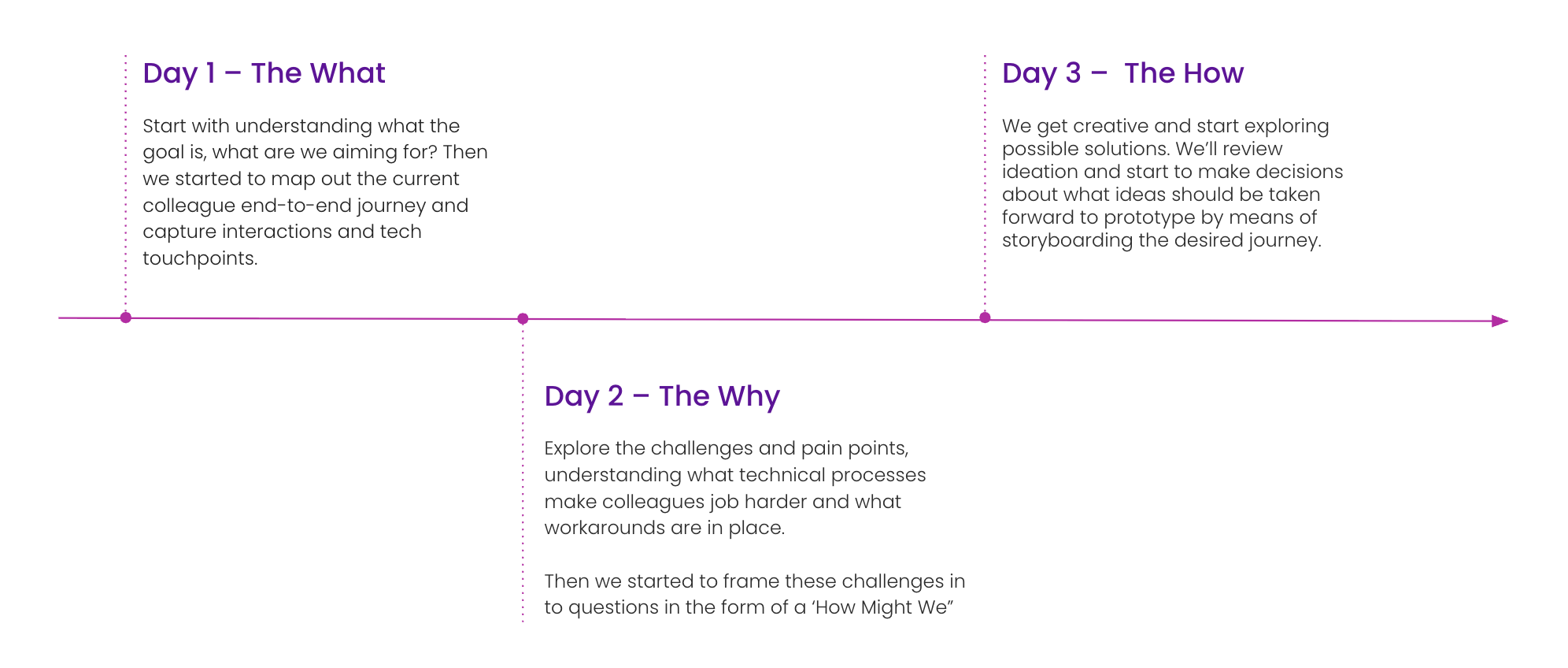
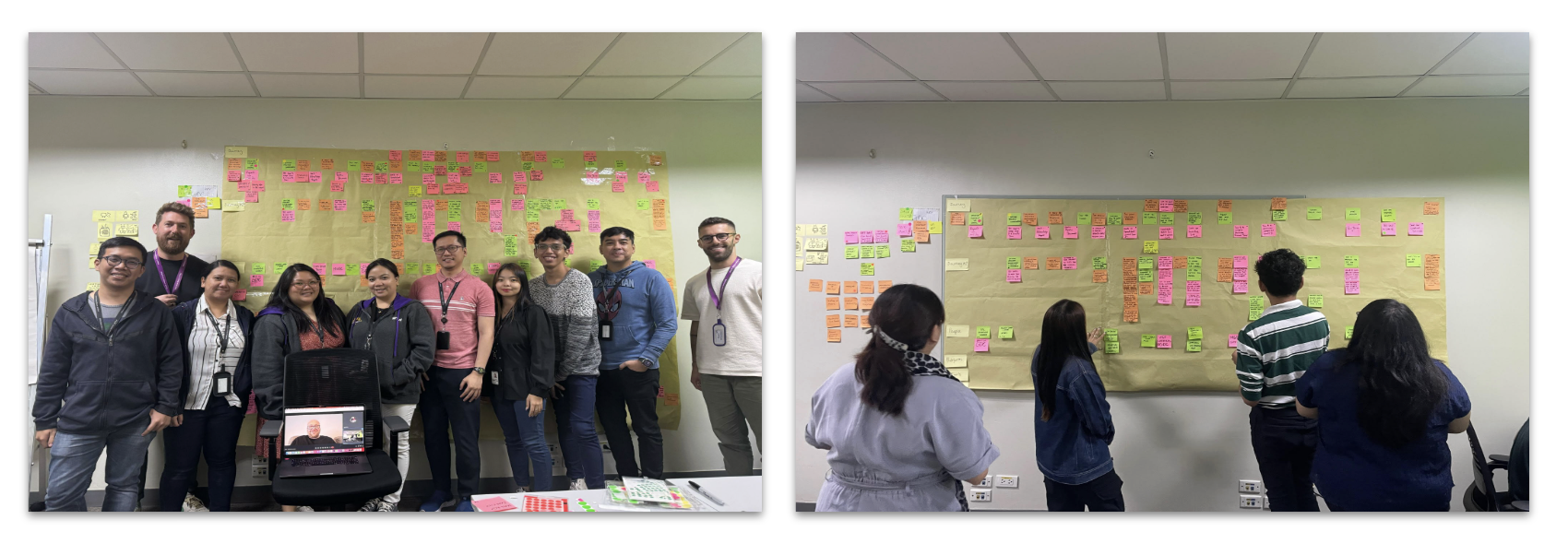
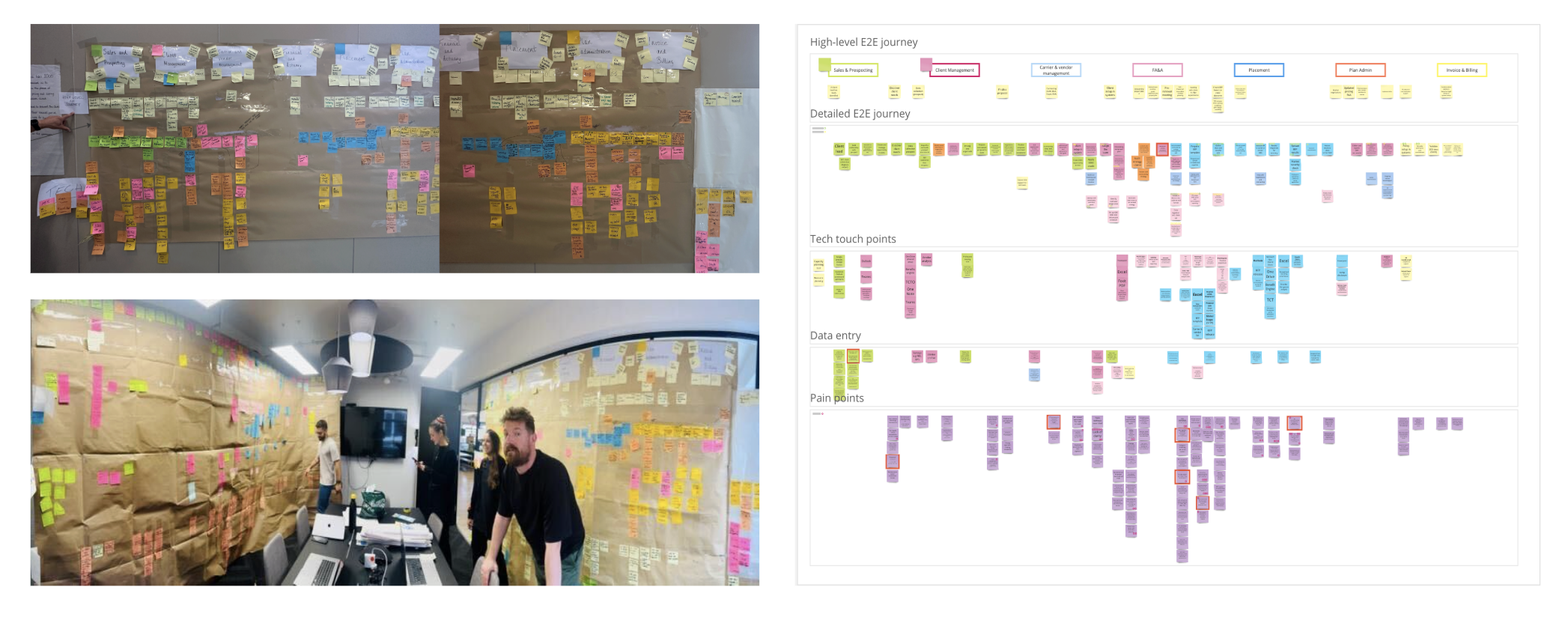
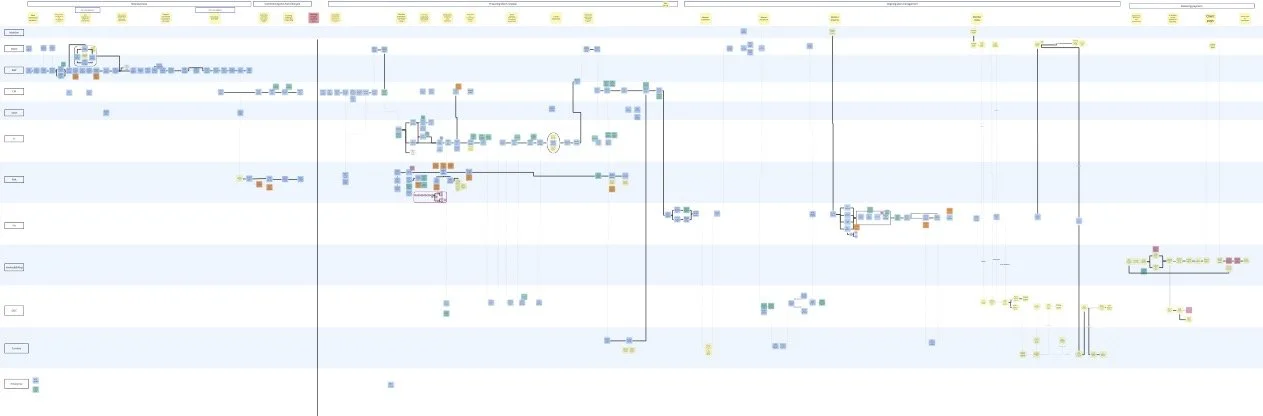
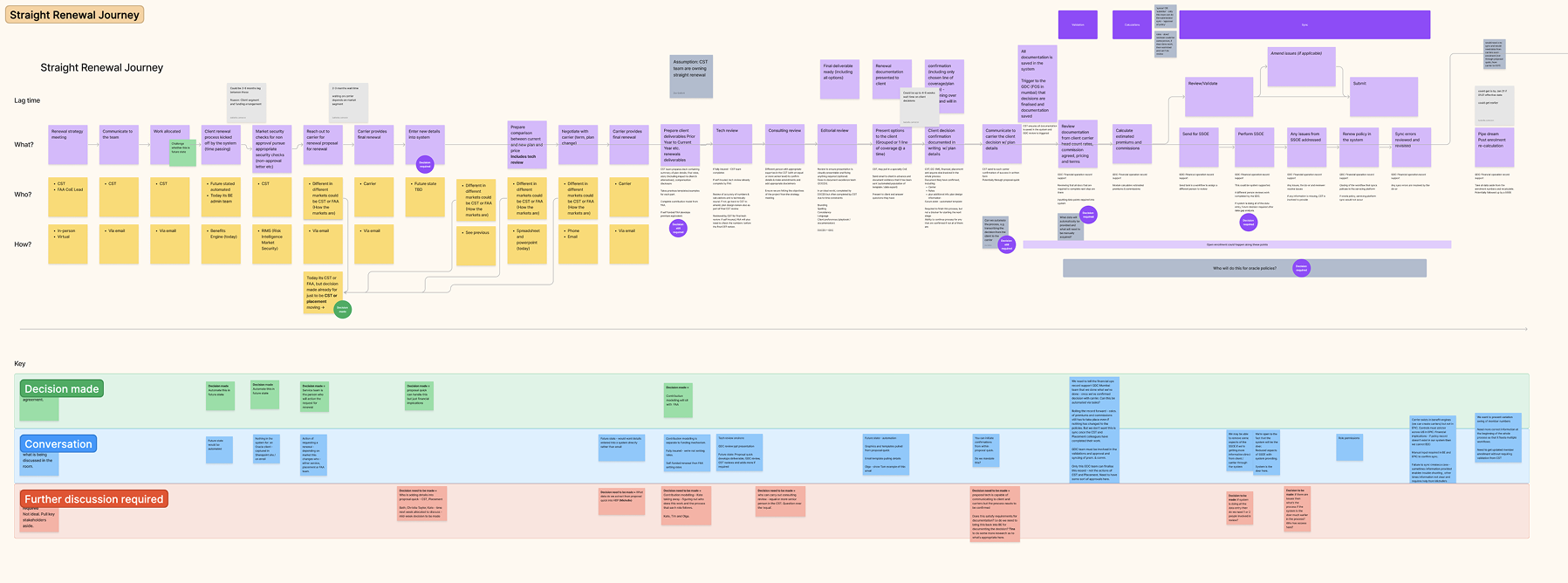
Through a series of workshops with the business, operations and technology we mapped the agreed the MVP journeys and use cases involved in servicing the RFP & Renewals process. This highlighted the pain points and their impact on the business, including inefficiencies, bottlenecks and areas where automation or process refinement could drive significant improvements.
The five common areas of pain across the roles and regions:
Access and use of data
Visibility across the client lifecycle
Collaboration & Communication
Role clarity & Expectations
Manual creation of outputs
Workshop Outcomes
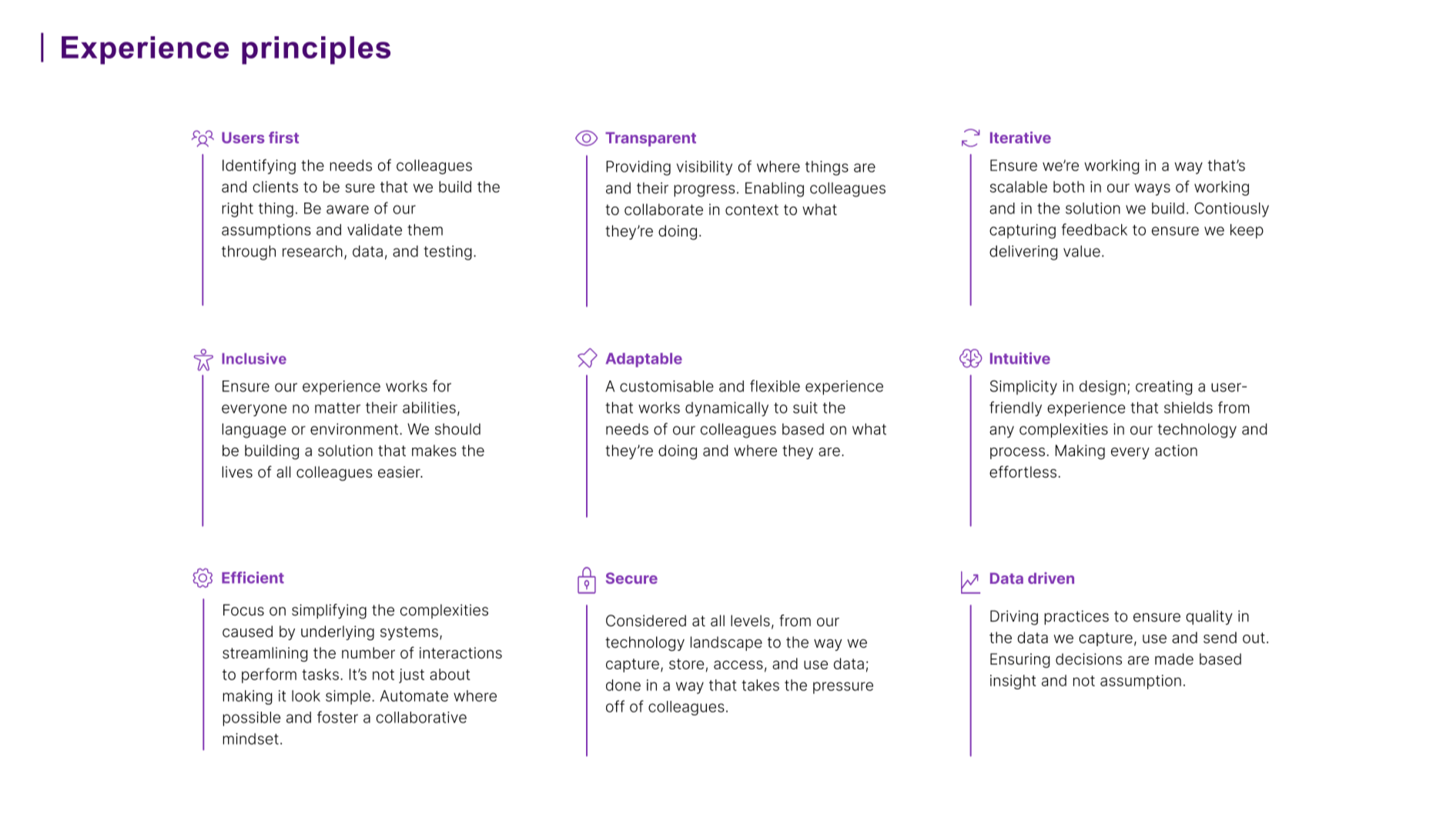
The team achieved a shared understanding of the challenges and alignment on the product vision and agreed a set of design principals. These workshops solidified the foundation for the next phases of design and development.
Building the Blueprint
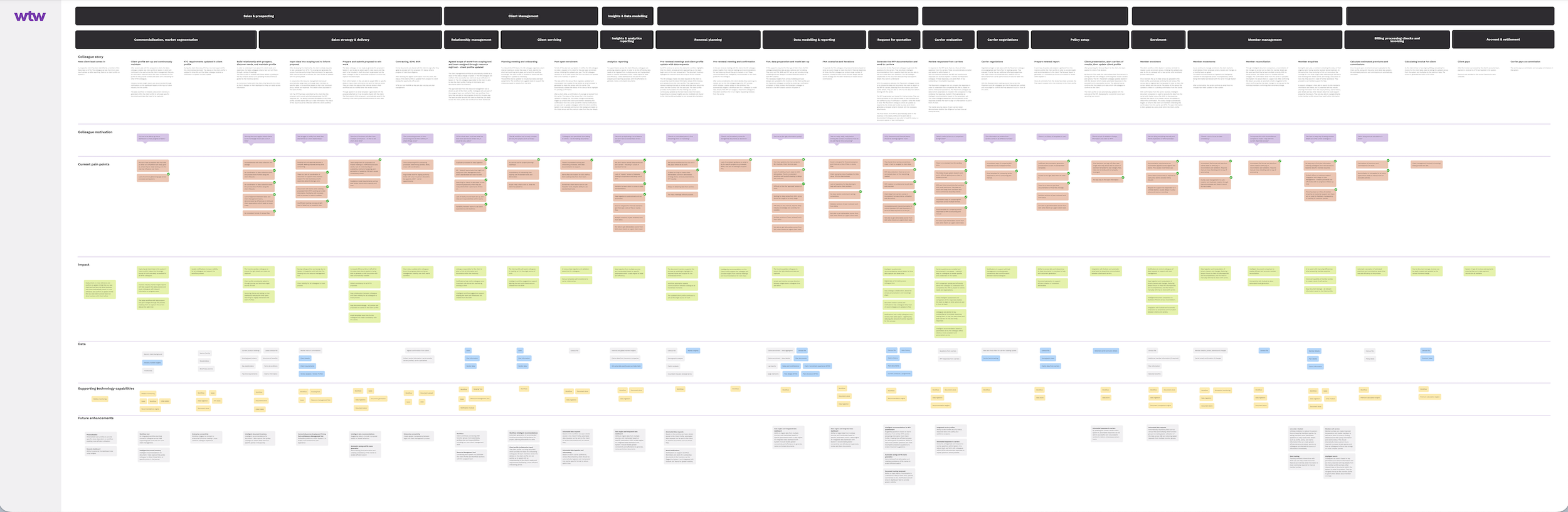
Once the E2E MVP journeys had been mapped we were able to produce an Blueprint to enabled the business to visualise the journeys, pains and tools used, building the awareness of how users experience the full E2E journey, creating the kick off point for the MVP.
This helicopter view service blueprint: Includes the colleague experience narrative supported by a flow highlighting the interaction points between different user groups, pain points in the experience, opportunities for value, localisation and mapping to systems data or capabilities in the current state.
Visualising the concept
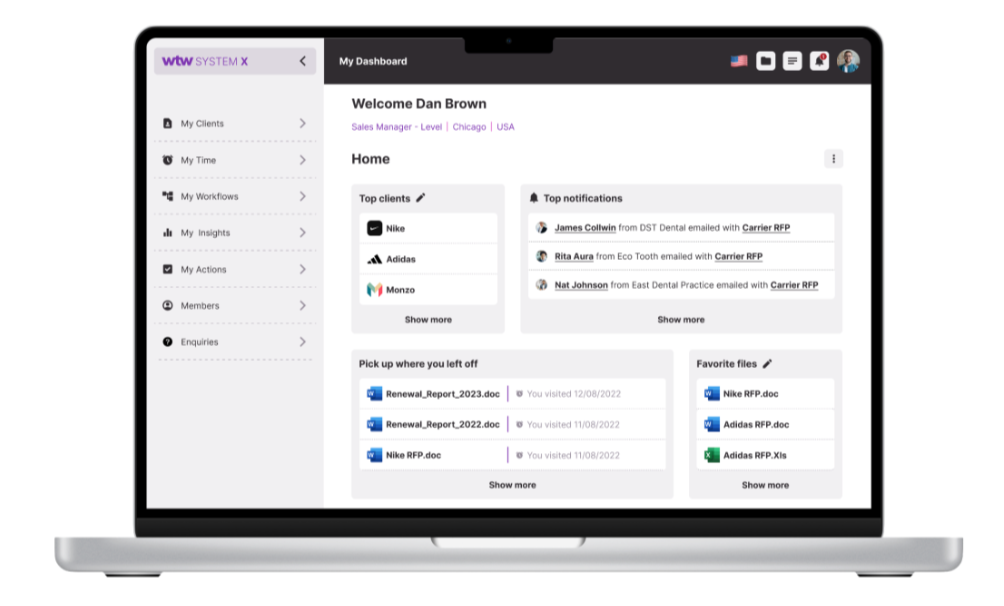
Through a series of global design sprints, we brought the concept interface to life by creating a clickable prototype supported by a clear user narrative that showcased the key problems the software aimed to solve. This proved pivotal in securing stakeholder buy-in and marked a turning point in the engagement, aligning the leadership and technology teams and bringing them on the journey with us.
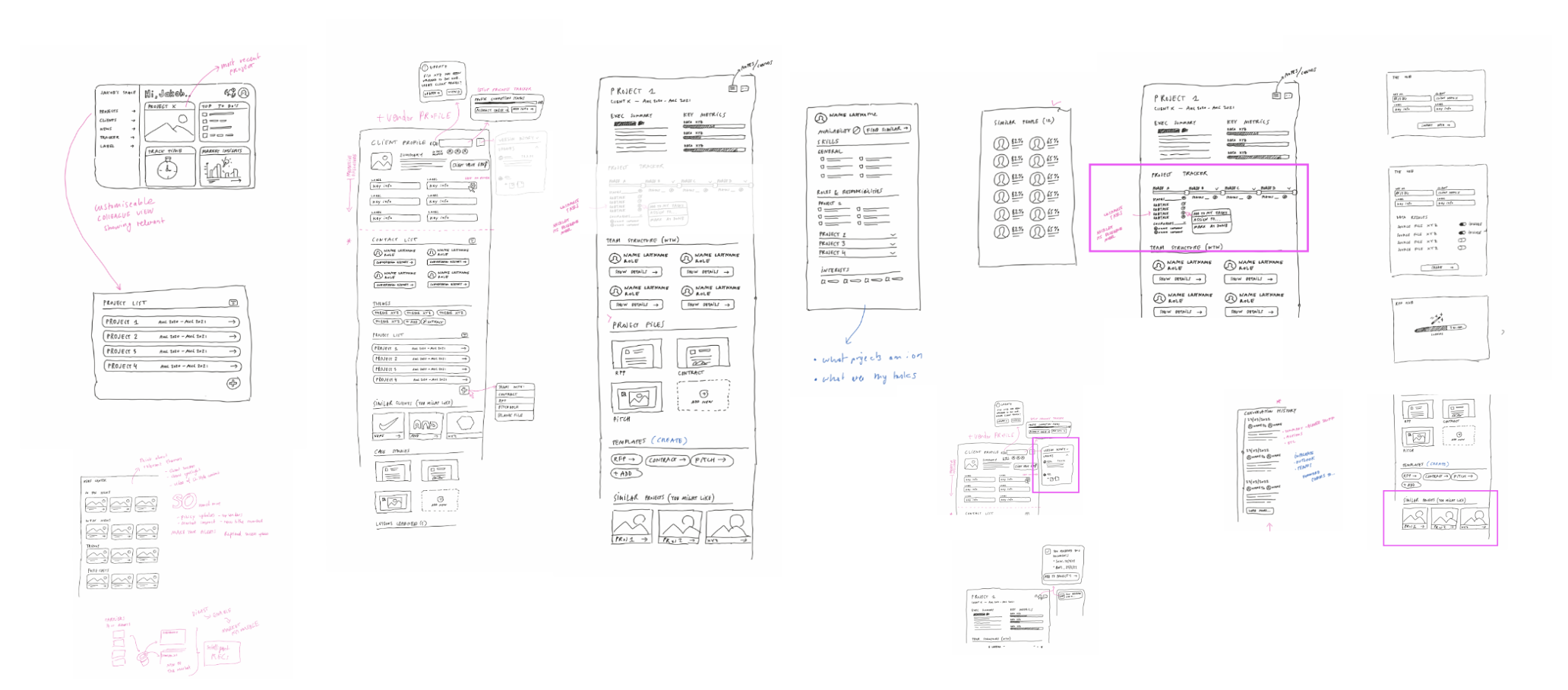
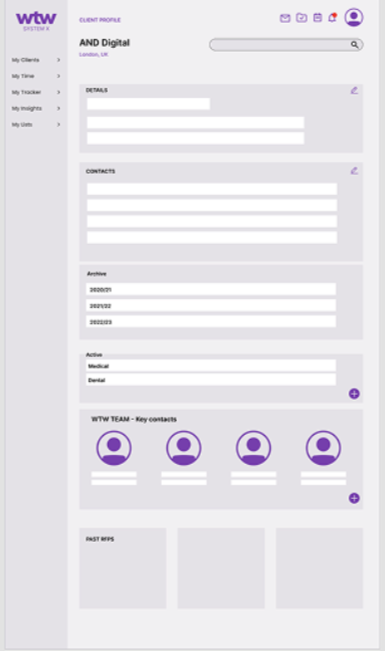
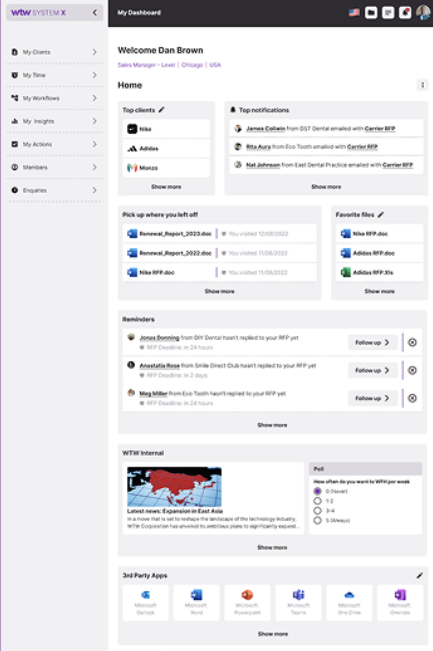
This conceptual prototype gives a high-level view of the vision showcasing the colleague journey across the core client lifecycle
Some key concepts this prototype demonstrates: A personalised and customisable colleague dashboard, a client profile becoming the single source of truth, automated workflows and team assignment, automated and intelligent document creation, automated data ingestion and intelligent comparison, Intelligent recommendations, seamless policy and member management.
Testing the concept
What
Conducted a series of user sessions specifically focused on validating a journey-led approach for the renewals process and observed how it worked for WTW Colleagues.
Why
The primary goal was to understand and validate the UI framework of a guided journey approach, and ensure it flows in a logical way with the relevant steps and necessary data. Additionally, we aimed to collect data on the ease of navigation, naming conventions, and usability improvements.
How
We facilitated 1-hour remote moderated sessions with 12 WTW colleagues. We presented 2 design options in alternating order and captured qualitative data and observable behaviours.
Objectives
Before we started this process we set out to achieve a specific set of outcomes that would help deliver value for the business.
Goals
Validate that we have an approach which covers what users actually do and simplify workflows
Validate that user only sees steps relevant to them and only inputs necessary data
Test navigation flow to ensure it’s intuitive
Get feedback on the nomenclature
Identify design and usability improvements
Validate the UI framework approach with the business and users
Gather additional insights on the renewal process to improve the experience
Key Take aways
Validated the guided journey framework as the right strategic direction: users quickly understood the approach and consistently highlighted how it would simplify and structure the renewals process, giving the business confidence to progress with this framework.
Clear design direction established: Combining the best performing elements from each design providing a clear path to a single, more cohesive design solution.
Terminology identified as a usability risk: inconsistent or unclear naming caused hesitation and confusion, highlighting a specific opportunity for iteration to improve comprehension, reduce cognitive load, and support faster task completion.
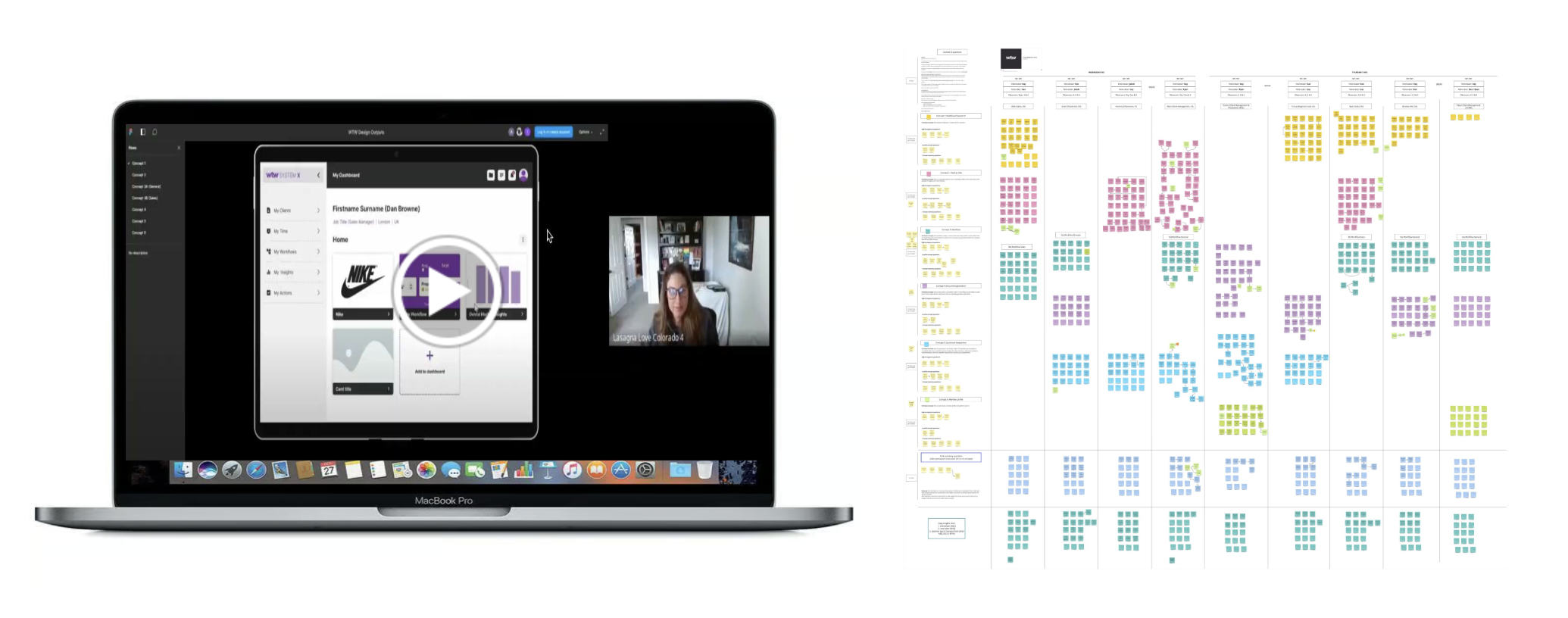
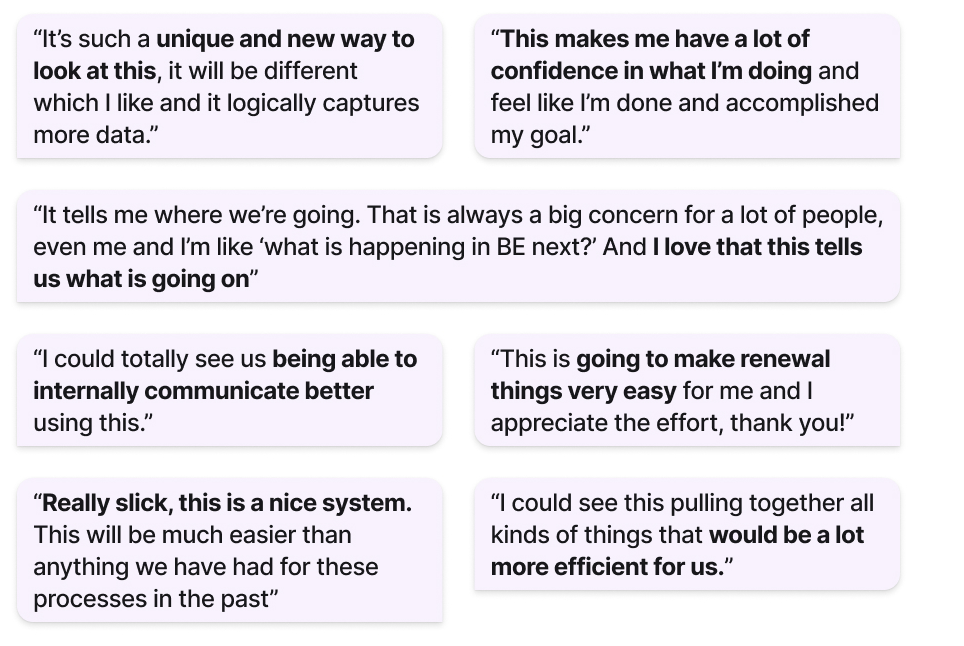

User testing insights playback
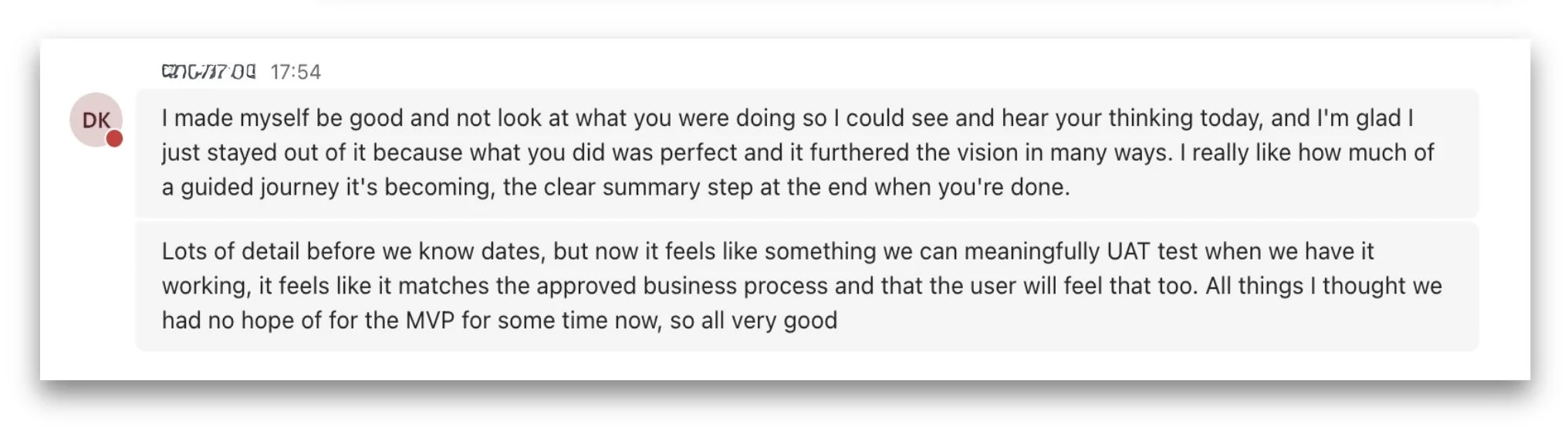
Feedback from our key stakeholder about the process
Scaling insight through continuous research
By continuously testing journeys as the design evolved, we combined qualitative insight with time-based metrics from contextual enquiries and ethnographic research. This allowed us to pinpoint where effort and delay were actually occurring and to provide the leadership team with insights they could trust.
The research revealed that user effort and time on task were largely driven by cognitive load and fear of making mistakes. This shifted stakeholder thinking from “what should we build?” to “what can we remove, simplify, or automate?”
These insights informed a redesigned on and offshore workflow, resulting in an 8% reduction in touch-points for the Renewal MVP and the development of a targeted AI automation strategy.
Delivering The MVP
Cross-functional MVP build
Activities
I Integrated into a WTW build team. Complex problem solving within design and development constraints and stakeholder management
Output
I had ownership and responsibility for defining the UX and creating build ready UI for multiple features, handover documentation and onboarding of 8 x new designers
Outcome
I was instrumental in getting WTW to realise the true value of taking a design led approach and embrace user testing, resulting in a much stronger focus on users when building the MVP
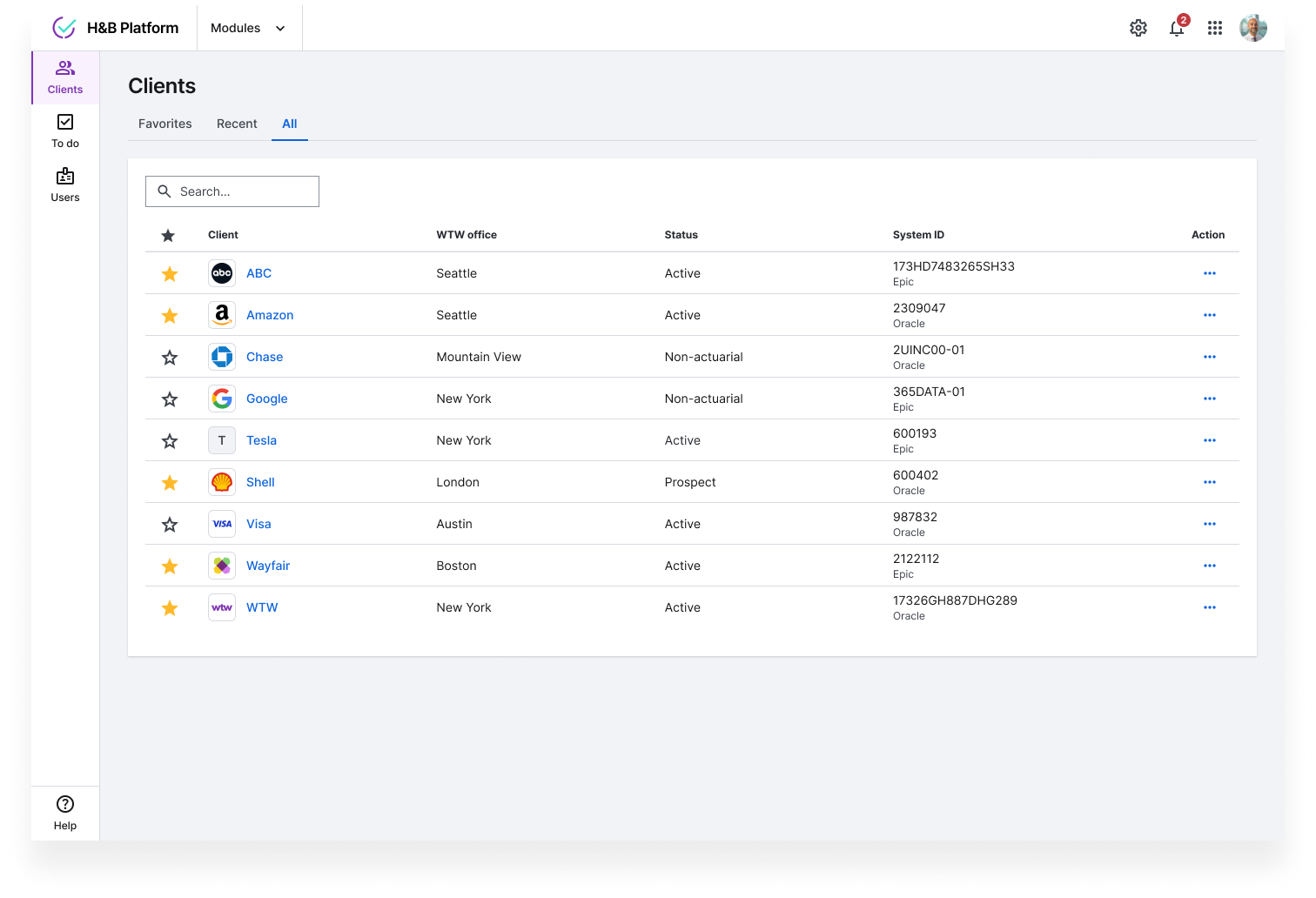
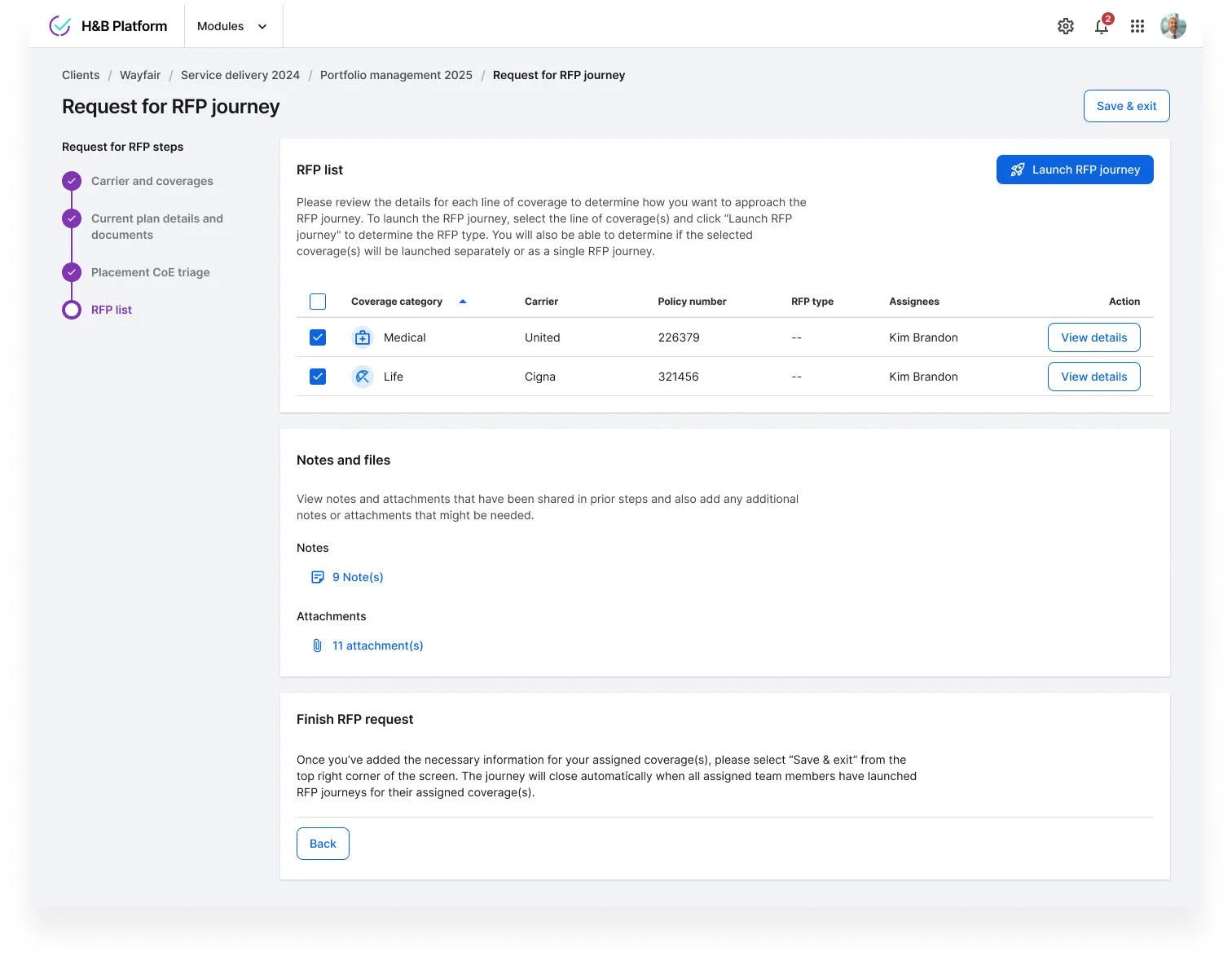
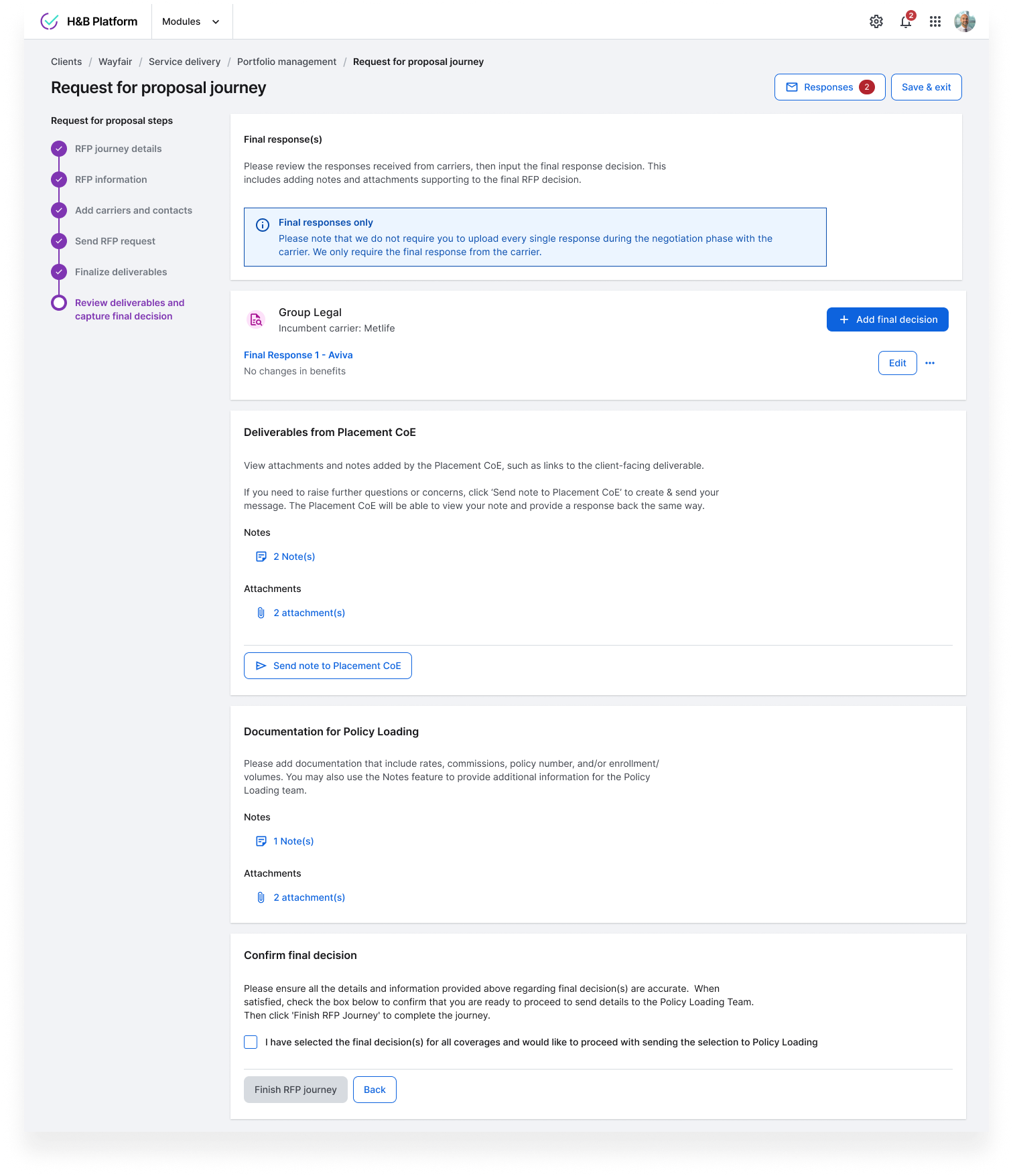
Delivering end to end designs
Following a rapid but complex 6 month build the MVP journeys for RFP & Renewals were delivered and ready to UAT in September 2024
Outcomes
Core Product Delivery
Designed and delivered an end-to-end RFP & Renewals MVP experience that exceeded initial expectations.Streamlined Operations
Reduced processing time and centralised operations, resulting in significant cost savings and improved efficiency.Scalable Design
Developed a reusable and configurable platform adaptable across global regions, supporting future scalability and consistency.Stakeholder Alignment & Relationship Building
Achieved alignment across diverse teams through clear communication and iterative collaboration. I played a pivotal role in building trust with key stakeholders, securing buy-in for the design process from both business and technology teams.Journey-Led Approach
Championed a shift towards a journey-led mindset at WTW, capturing valuable insights to ensure the best possible user experience while balancing business needs and technical constraints.Introducing User Testing
Convinced the business to embrace user testing for the first time, transforming their perception of design. This shift enabled more user-centred decision-making and the creation of a product that delivers genuine value to its users.Educating and Empowering WTW
Actively promoted design thinking and UX best practices, focusing on simplicity, user-centricity, and accessibility to elevate internal capability and awareness.Building an internal design capability
Onboarded and mentored 8 new designers, cultivating a high-performance team culture that accelerated project delivery and elevated the design maturity at WTW.Breaking Down Silos
Implemented improved ways of working and communication between business and technology teams, demonstrating the tangible value of cross-functional collaboration.Overall Impact
Through these efforts, I was instrumental in elevating WTW’s digital capability and embedding a stronger user focus in the MVP design, ultimately delivering a greatly improved colleague experience.
Challenges & Solutions
Complex Stakeholder Environment
Challenge: Navigating a large and diverse group of international stakeholders with differing priorities.
Solution: Invested time in building trusted relationships, which helped secure stakeholder buy-in for UX improvements and demonstrate the value of design through user testing.Technical Constraints
Challenge: Existing technology limitations restricted the scope of potential design solutions.
Solution: Collaborated closely with technical teams to understand and empathise with their constraints, designing solutions that aligned with system capabilities while maintaining a user-focused mindset.Low UX Maturity
Challenge: Limited understanding and adoption of UX practices across teams.
Solution: Introduced weekly design critis and reviews with internal designers to demo work, share knowledge and propose design system improvements, helping accelerate MVP delivery and uplift UX maturity.Poor Data Quality
Challenge: Incomplete or inaccurate datasets often created discrepancies and slowed down workflows.
Solution: Established clearer communication channels with data teams to identify and resolve inconsistencies early, improving efficiency and data reliability.
Lessons Learned
The Power of Intentional Collaboration
Tailoring collaboration methods to the needs of diverse stakeholders fostered trust, alignment and greater efficiency.Iterative Design Approach
An iterative design approach helped strike the right balance between flexibility and standardisation of systems, ensuring the solution could scale and evolve without losing coherence.Aligning Technology and Process
Close collaboration with technical and operational teams ensured that design concepts translated into practical, implementable solutions.
My development
Seeing the project through from discovery to delivery has been a significant milestone in my professional growth as a designer. Navigating the challenges of a complex international stakeholder landscape and designing within WTW’s many constraints pushed me to think strategically about how design influences adoption and usability. I also led the design of several key product features, including the integration of a data ingestion AI tool, arguably the MVP’s standout feature, which delivered exceptional value for both business and users.
Want to know more?
This case study provides a brief overview of the work. It highlights key aspects of the project but only scratches the surface of the challenges addressed, insights uncovered, and solutions delivered. If you’re interested in a deeper dive into this project, I’d be happy to discuss it in more detail, please feel free to reach out!