AVIVA
January - July 2023
Designing a unified customer experience for the MyAviva app
The Client
Aviva is a leading insurance, wealth and retirement company providing life, general, health and investment products to individuals and businesses across the United Kingdom.
The Challenge
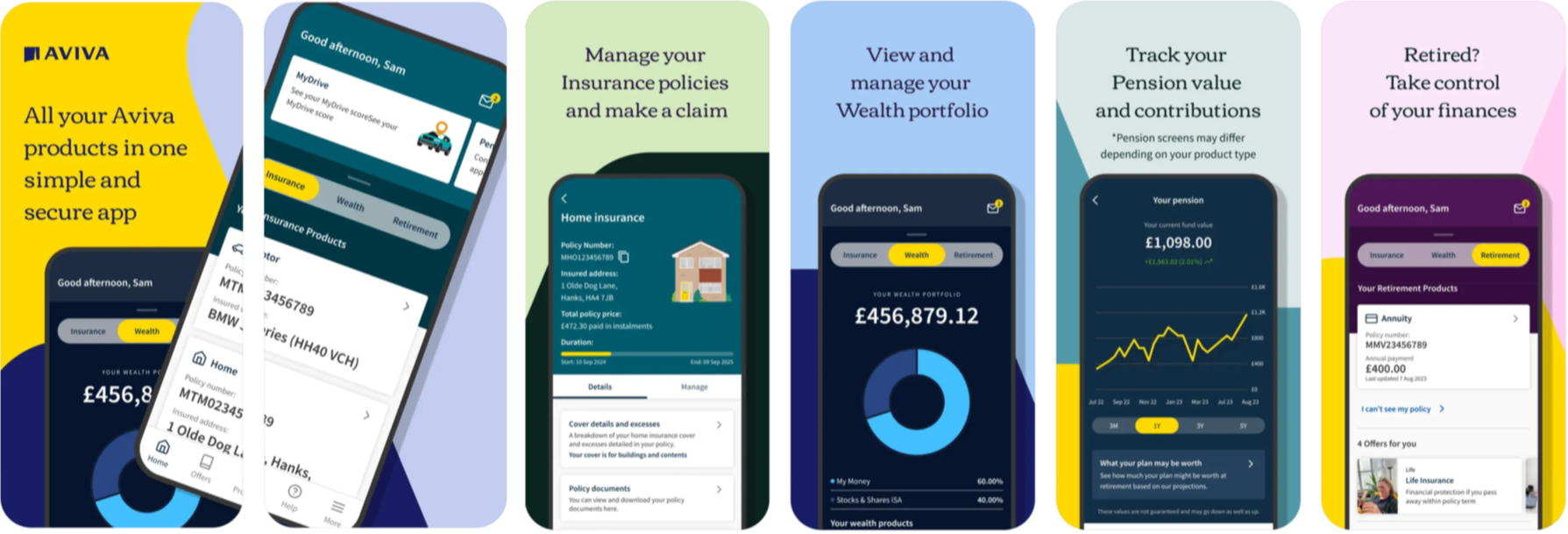
Aviva had 12 separate apps on the App Store, with an average satisfaction rating of 3.4. To stay competitive with leading finance brands offering a single, cohesive customer experience, Aviva aimed to consolidate their digital ecosystem into one unified app. “A single front door for all customers.”
This initiative aligned with the wider ‘OneAviva’ strategy, focused on delivering a seamless and connected customer experience.
The Team
A dedicated discovery team was set up (UX, UI, CX & Research designers) to ensure that the customer need was at the forefront to drive the process from concept to build ready designs.
Ryan Wiseman - CX Design
Dan Browne - UX Design
Isabelle Cameron - UX Research
Niall Moran - UI Design
My Role
As the UX Designer on the project my role was to understand both the complex business requirements and customer needs and translate them into meaningful Mobile experiences to ensure that the product was intuitive, scalable and delivered against the business KPIs (60% uplift in Monthly logins) and increased the CSAT (customer Satisfaction Score)
I acted as the bridge between customer needs, business goals and the development teams, ensuring design decisions were backed by research and aligned with the OneAviva strategy.
The Outcome
The new homepage and onboarding experience established a new engagement model, helping realise the OneAviva mission.
38 x Growth in monthly logins, from 70,000 to 2.7 million a month
300% Increase in the customer satisfaction score, up 15 points
35% Increase in App Store rating, from 3.4* to 4.6* today
“Tackling the homepage was without a doubt the hardest thing anyone has had to deal with and we’ve come to a solution that everyone is happy with.”
Alex Allan - Head of MyAviva
Research & Discovery
Understanding the Problem
Activities
A comprehensive discovery phase included:
Collaborative workshops and Design Sprints
User testing sessions to validate assumptions
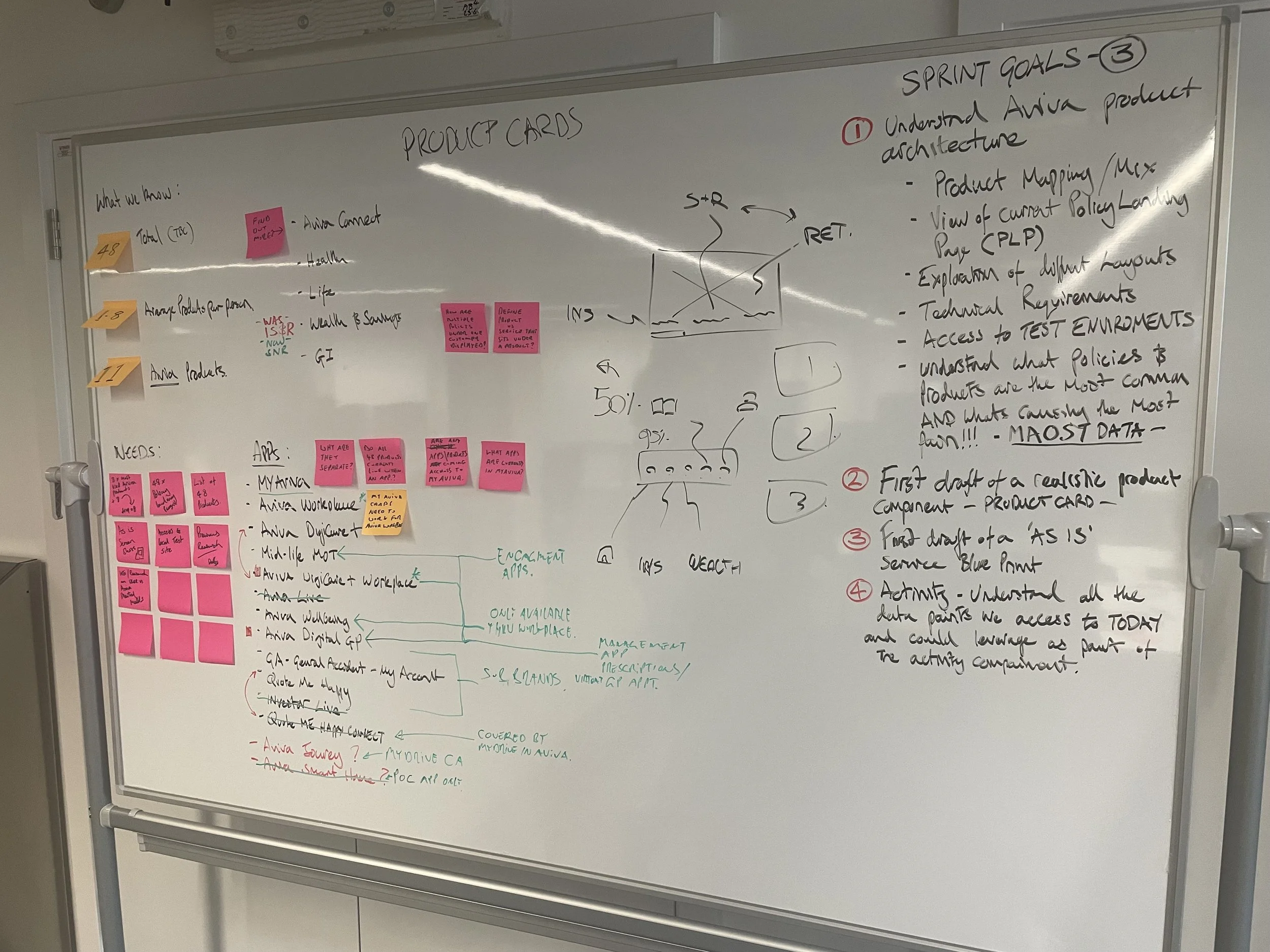
Blueprint design and visual exploration exercises
Output
Clearly defined the problem space and customer pain points:
Built a shared understanding across teams of the customer and business requirements
Visual Design exploration to enhance the overall usability and look & feel of the home page and onboarding screens
Outcome
Our research provided Aviva with a deep understanding of customer behaviours, motivations and frustrations, enabling a user-centred approach to designing the new app’s homepage and onboarding journey.
This process revealed an opportunity to:
Connect with customers in a more meaningful way
Unify three core business areas into a single, customer focused app experience
Collaborative Workshops and Design Sprints
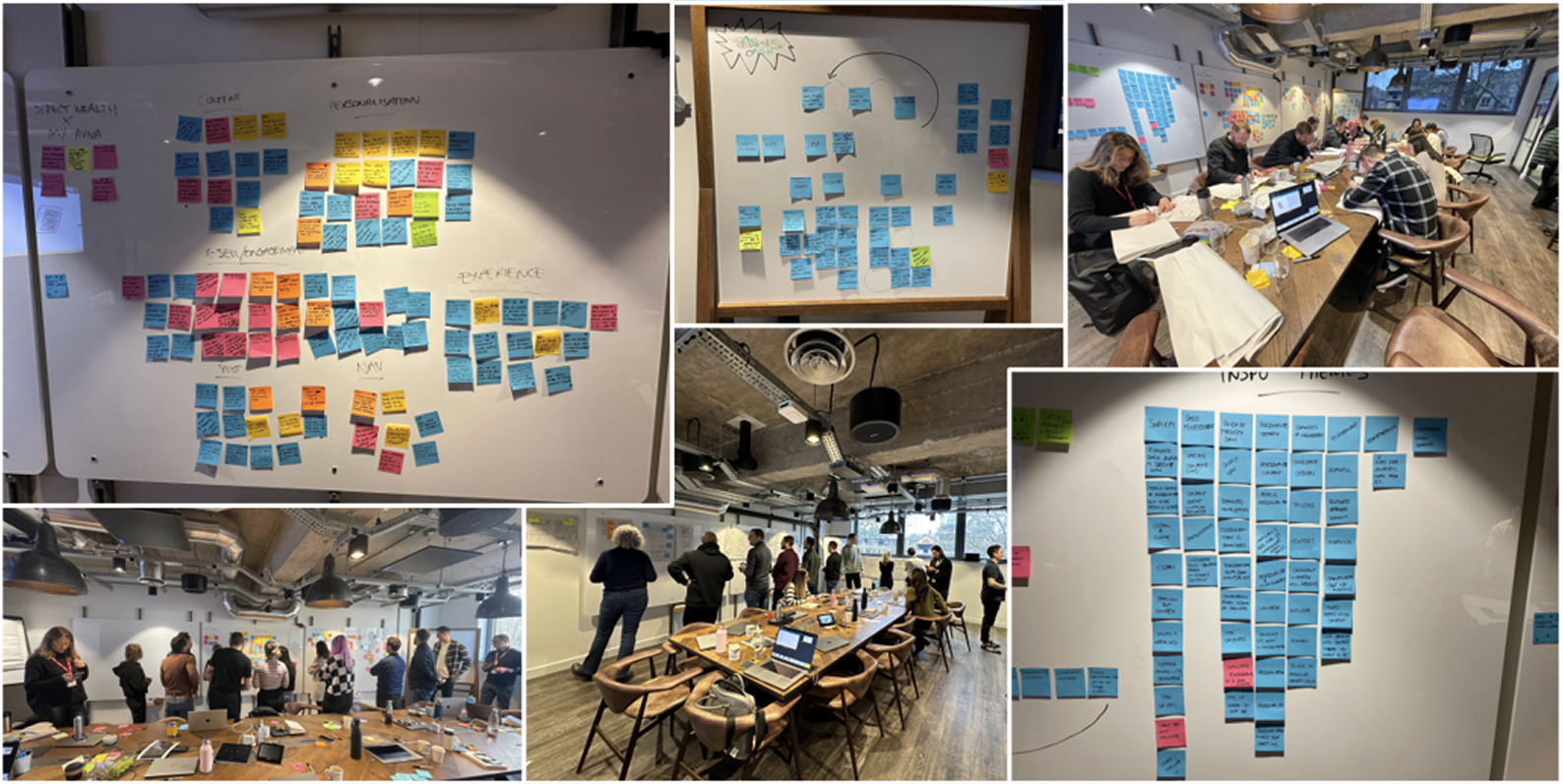
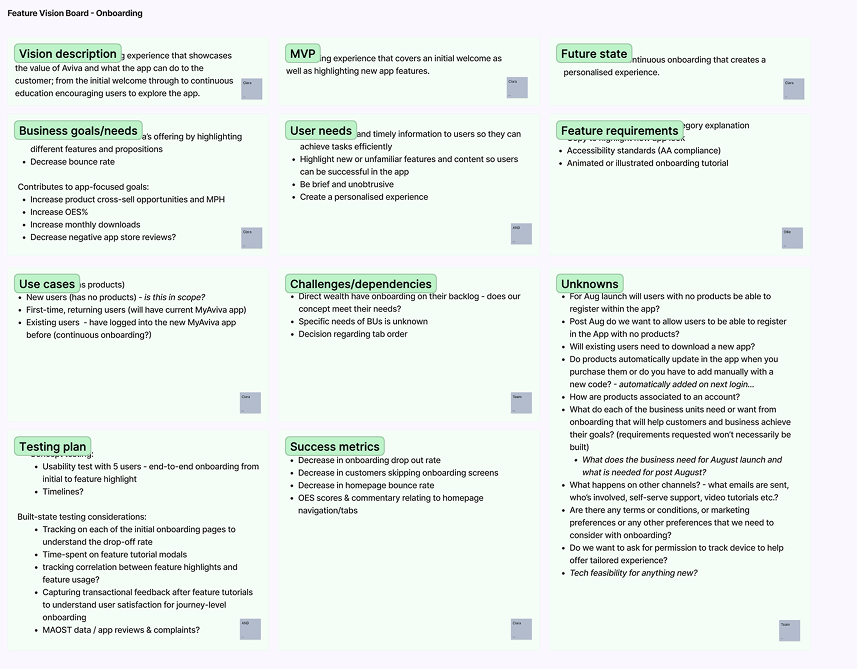
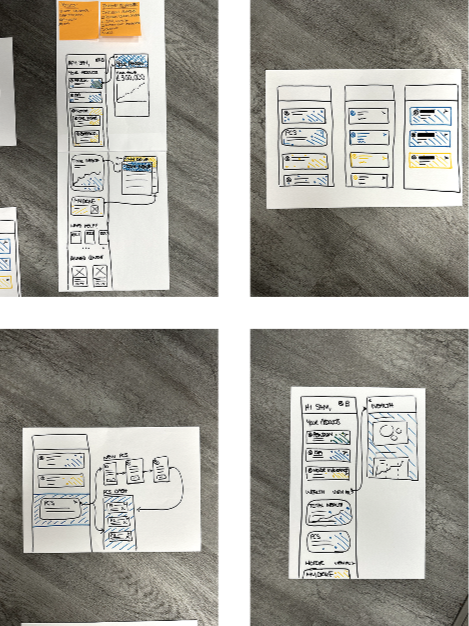
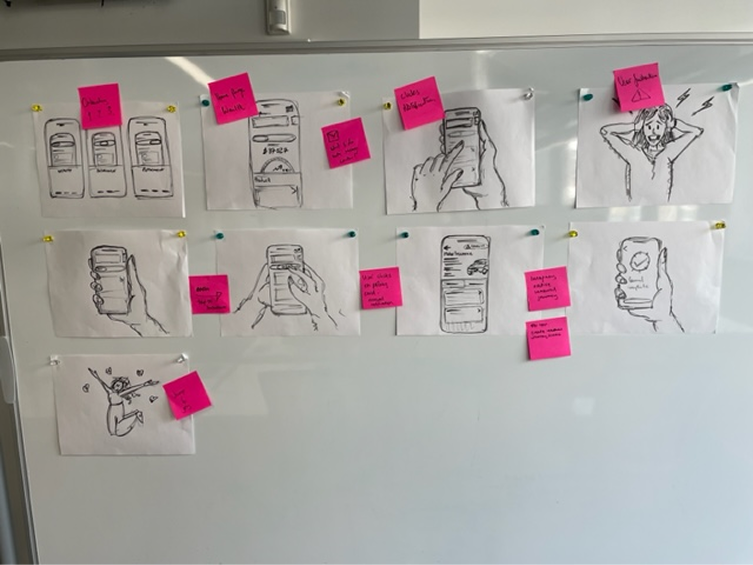
Our process began with collaborative workshops and focused design sprints that brought the MyAviva business and technology teams together to align on a vision, user needs and agree a creative direction. Through hands-on brainstorming, rapid prototyping and concept user testing we turned ideas into tangible app concepts quickly and efficiently. This approach ensured every design decision for the Aviva home page was grounded in collaboration, clarity and user-centric innovation.
User Testing Sessions (Moderated & unmoderated)
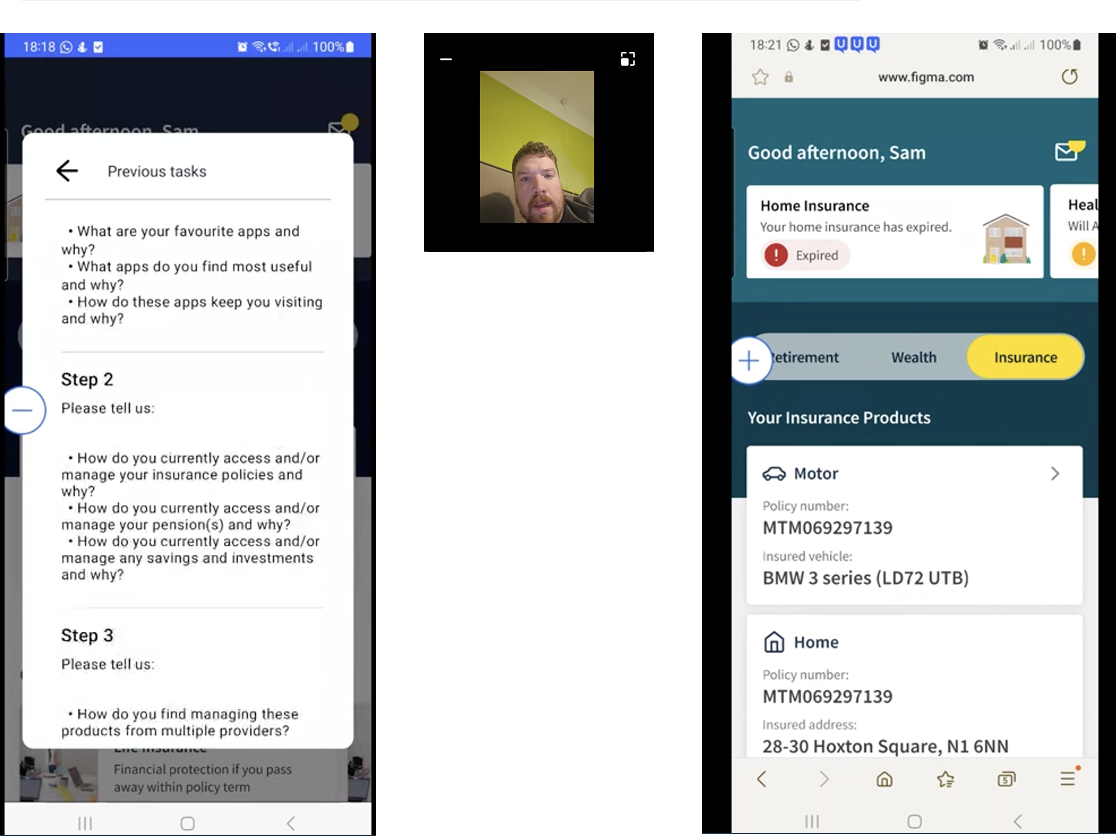
We conducted user testing sessions using UserZoom to validate our design assumptions and ensure the app home page truly met user needs. By observing real users interact with prototypes, we gathered valuable insights into usability, navigation patterns and overall customer experience. These sessions helped us identify areas for improvement early, refine the design based on real feedback and confirm that our solutions effectively addressed user expectations and business goals.
Unmoderated Card Sorts for Taxonomy
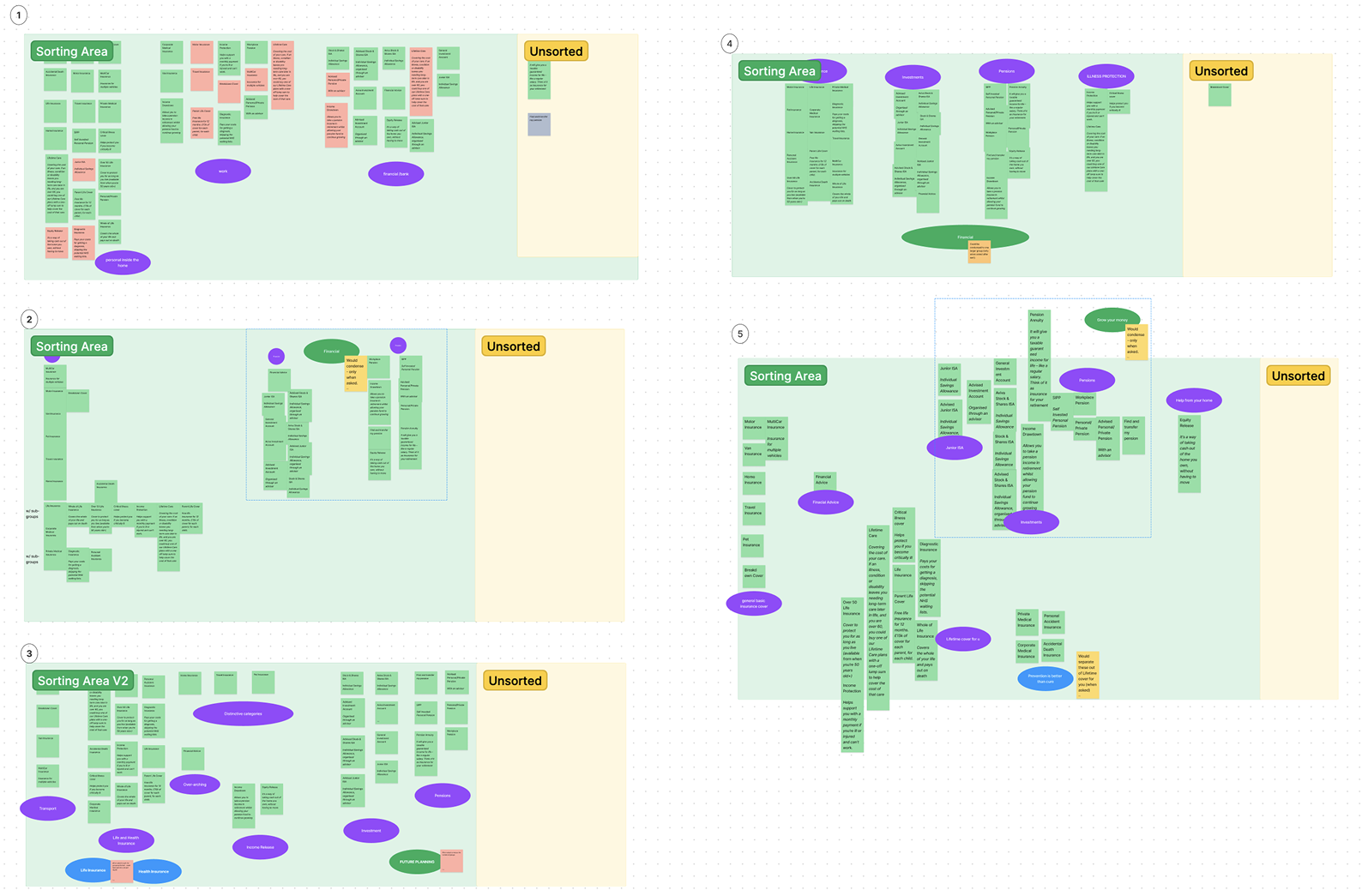
To create a clear and intuitive information architecture for the MyAviva products within the app we conducted a series unmoderated card sorts. Participants were asked to organise products in sections that felt natural to them, helping us understand the customers mental models and expectations. The insights from these sessions guided our taxonomy and navigation design, ensuring that information was grouped logically and could be easily found without confusion or extra effort.
This research ended months of stakeholder deadlock around the app’s information architecture, aligning the three core business areas on a single, agreed structure.
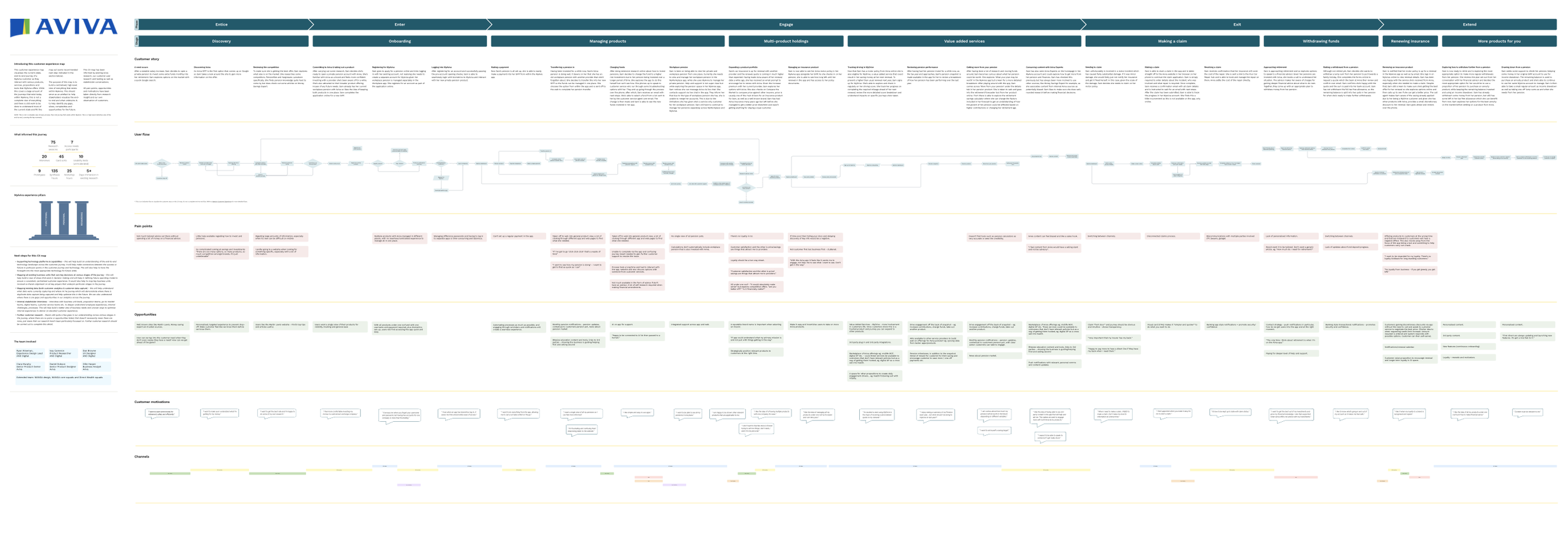
Understanding the Customer Journey
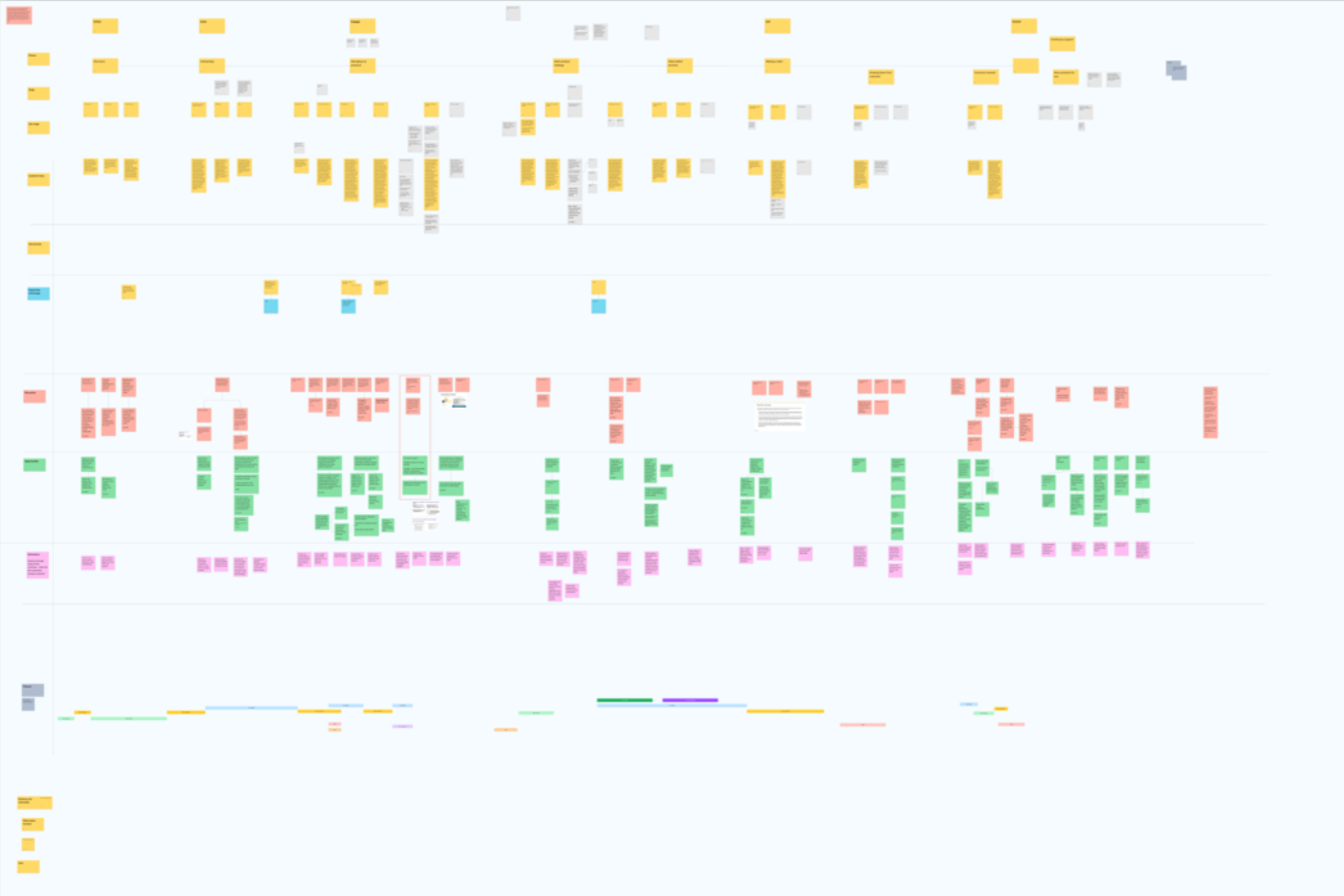
To ensure the Aviva home page design met real user needs, we began by understanding and mapping key customer journeys across all three brands. This process involved mapping the steps from initial customer engagement through the product lifecycle. By visualising these journeys in a Blueprint, we identified opportunities to streamline interactions, remove friction points and highlight the moments that matter most to users.
The resulting journey maps and CX Blueprint served as a strategic foundation for design decisions, ensuring the experience was seamless, purposeful and most importantly user-centered.
Stakeholder buy-in
Throughout the research phase, we regularly updated and shared findings with stakeholders, ensuring alignment, transparency and continuous refinement of our approach.
This open communication fostered trust and mutual understanding, creating a strong, collaborative working environment where all parties felt heard and invested in the project’s success.
Usability & Design Exploration
Refining the solution
The Visual Design Process
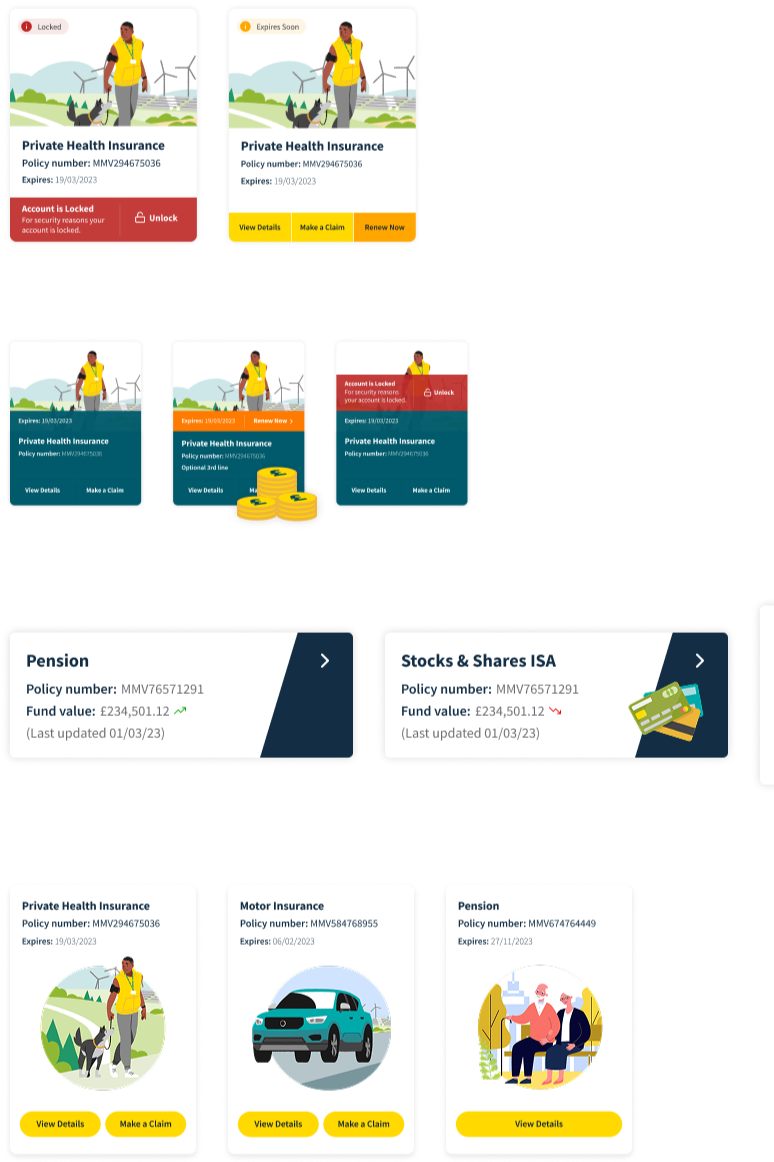
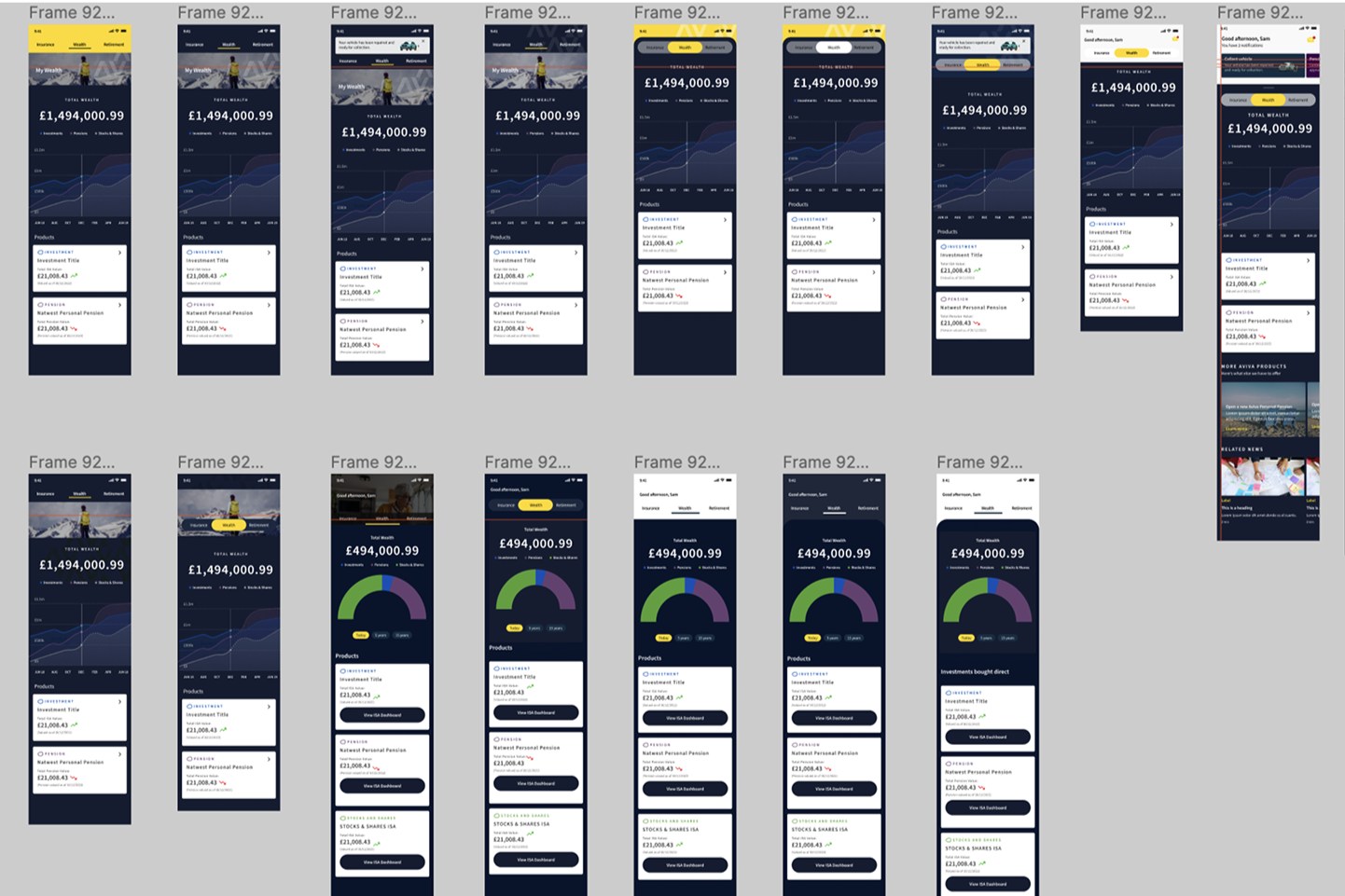
The visual design phase focused on exploring and refining the look and feel of the Aiva home page. We developed multiple visual design directions, experimenting with layout, typography, color, and imagery to capture the right balance between brand consistency and user appeal.
These explorations were then tested with customers to assess clarity, engagement and aesthetic preference. Insights from the testing informed iterative refinements, ensuring the final design was not only visually compelling but also intuitive, accessible and aligned with Aviva’s brand identity.
The Results
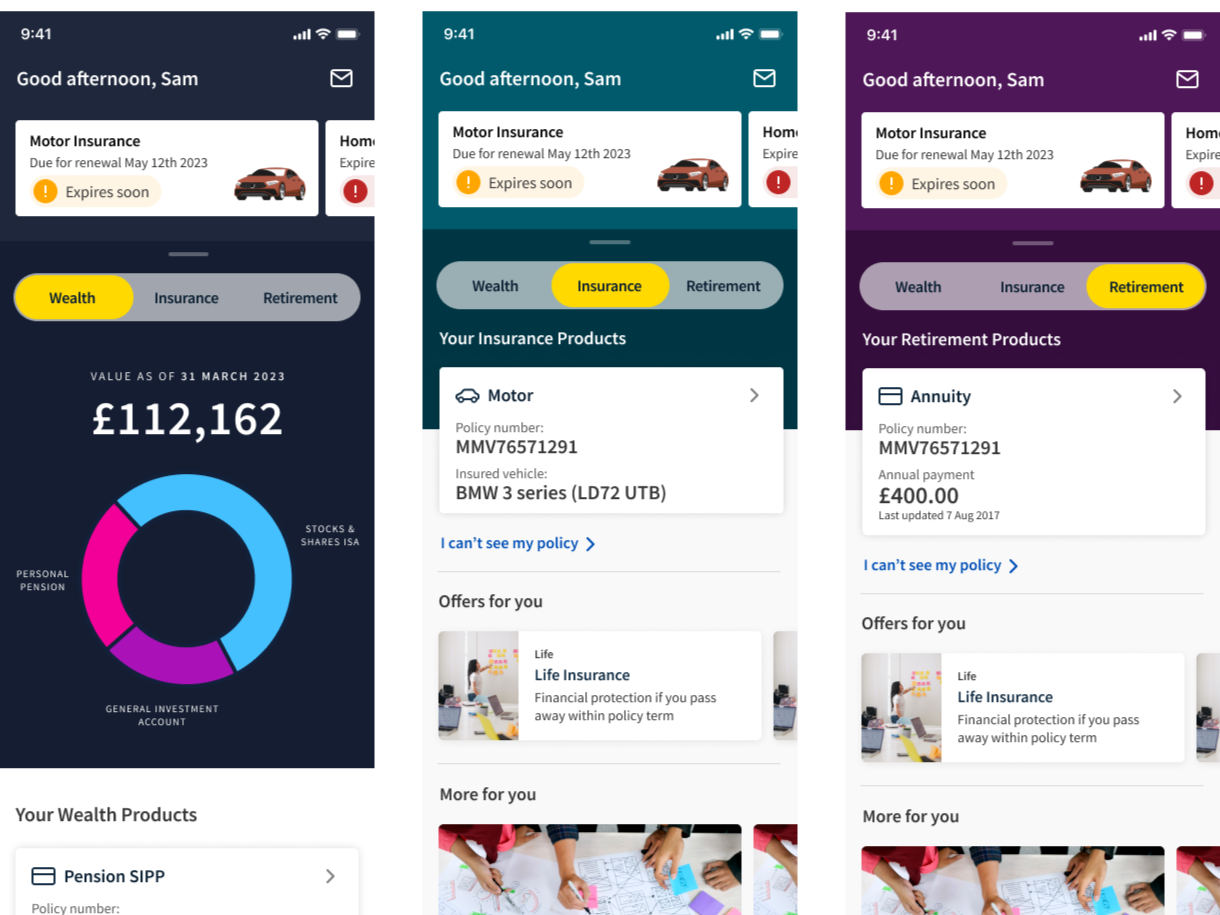
UI Solution: Split Area Home Screen
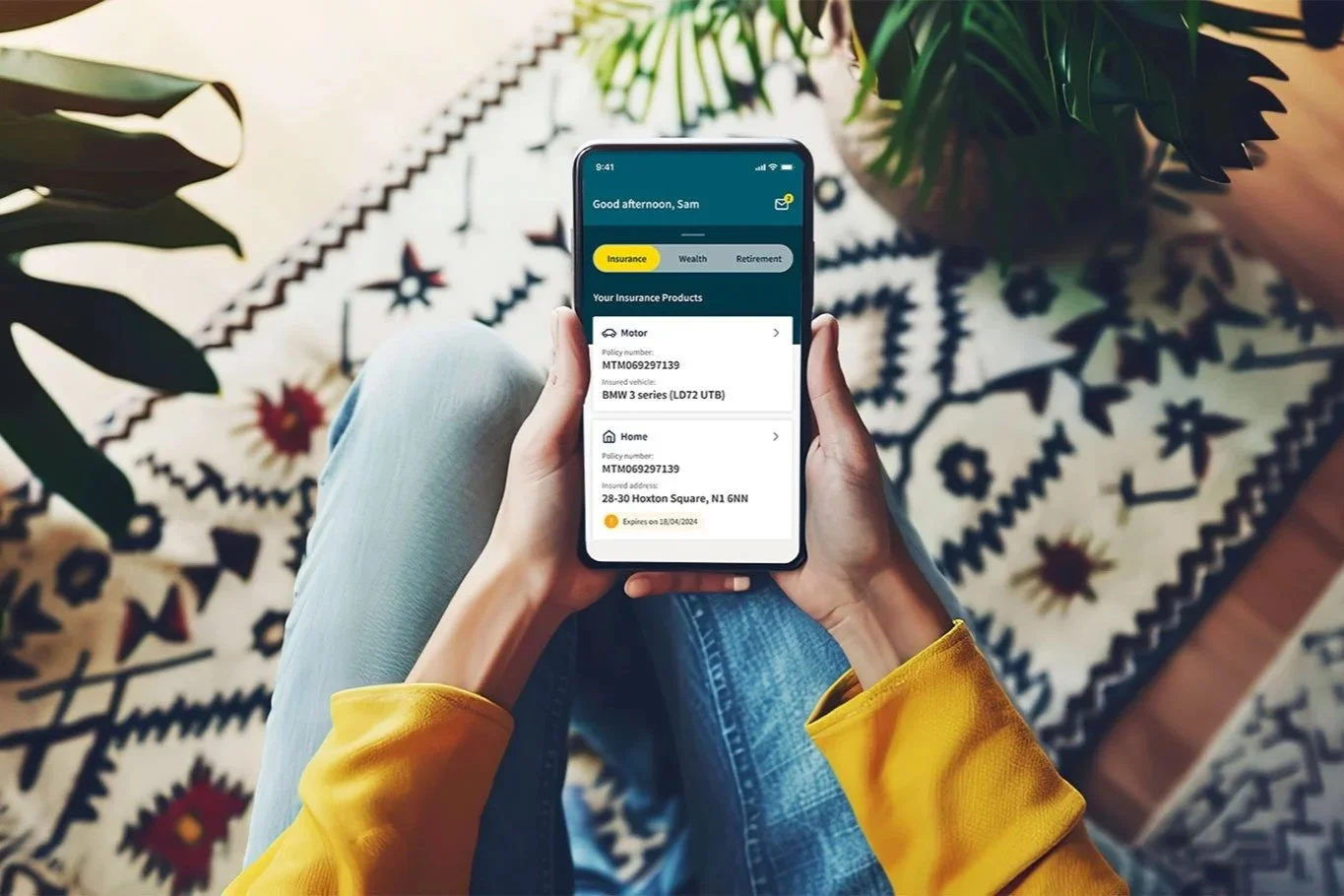
The final UI solution featured a split-area home screen design. The top section served as a universal space displaying information relevant to all three brands, while the lower section allowed users to toggle between each brand’s individual home screen. This approach created a cohesive yet flexible experience, accommodating shared content and brand-specific functionality within a single interface. The solution was endorsed by all three business departments with the Head of Aviva Mobile praising it as “an amazing achievement.”
The Outcome
The new homepage and onboarding experience established a new engagement model, helping realise the OneAviva mission.
38 x Growth in monthly logins, from 70,000 to 2.7 million a month
300% Increase in the customer satisfaction score increased by 15 points
35% Increase in App Store rating increase from 3.4 * to 4.6* today
Reflections
Challenges & learnings
Project Challenges
Cross-department alignment: Bringing three siloed business departments together around one unified vision that addressed diverse needs and priorities.
Tight transformation deadlines: Delivering high-quality design solutions within an accelerated project timeline.
Legacy technology constraints: Working within existing tech stacks that presented performance limitations and integration challenges.
Balancing innovation and feasibility: Ensuring creative solutions could be realistically implemented given technical and time constraints.
Maintaining stakeholder engagement: Keeping all teams aligned and invested throughout the fast-paced design and validation process.
Key Learnings
Collaboration is crucial: Early and consistent engagement with all departments helped align goals and build shared ownership of the solution.
User validation drives confidence: Regular testing and feedback ensured design decisions were grounded in real customer needs, not business assumptions.
Insights: Research only influences strategy when it’s framed as a business choice, not a research finding and had the greatest impact when it’s commercially viable.
Clear communication bridges silos: Transparent updates and visual storytelling helped unify stakeholders around a common vision.
Design thinking accelerates transformation: Structured design processes like workshops, sprints and user testing enabled rapid progress even under tight deadlines.
Want to know more?
This case study provides a brief overview of the work. It highlights key aspects of the project but only scratches the surface of the challenges addressed, insights uncovered, and solutions delivered. If you’re interested in a deeper dive into this project, I’d be happy to discuss it in more detail, please feel free to reach out!